Saturday, April 25, 2026

A00147 - Kalu Rinpoche, Tibetan Buddhist Lama, Meditation Master, Scholar and Teacher


Rinpoche, Kalu 

888888888888888888888888888888888888888888888888888888888888888888888888888888888888888888888888888888888888

Kalu Rinpoche
Kalu Rinpoche in 1987 at Kagyu Rintchen Tcheu Ling in Montpellier, France
Personal life
Bornc. 1905
Kham, Eastern Tibet
DiedMay 10, 1989
(age 84)
Sonada Monastery, Darjeeling West Bengal India
NationalityTibetan
OccupationLama
Religious life
ReligionTibetan Buddhism
SchoolKagyu
LineageShangpa KagyuKarma Kagyu

888888888888888888888888888888888888888888888888888888888888888888888888888888888888888888888888888888888888

"You live in illusion and the 

    appearance of things.

"There is a Reality. You are

    that Reality.

"When you understand this, 

    you will see that you are 

    nothing.

"And being nothing, you are

    everything.  That is all."  (12/07/2024)

888888888888888888888888888888888888888888888888888888888888888888888888888888888888888888888888888888888888

Kalu Rinpoche (1905 – May 10, 1989) was a Tibetan Buddhist lama, meditation master, scholar and teacher. He was one of the first Tibetan masters to teach in the West.

Early life and teachers

Kalu Rinpoche was born in 1905 during the Female Wood Snake year of the Tibetan lunar calendar in the district of Treshö Gang chi Rawa in the Hor region of Kham, Eastern Tibet.

When Kalu Rinpoche was fifteen years old, he was sent to begin his higher studies at the monastery of Palpung, the foremost center of the Karma Kagyu school. He remained there for more than a decade, during which time he mastered the vast body of teaching that forms the philosophical basis of Buddhist practice, and completed two three-year retreats.

At about the age of twenty-five, Rinpoche left Palpung to pursue the life of a solitary yogi in the woods of the Khampa countryside. For nearly fifteen years, he strove to perfect his realization of all aspects of the teachings and he became renowned in the villages and among the nomads as a representative of the Bodhisattva path.

Teaching activity in Tibet

Kalu Rinpoche returned to Palpung to receive final teachings from Drupon Norbu Dondrup, who entrusted him with the rare transmission of the teaching of the Shangpa Kagyu. At the order of Situ Rinpoche, he was appointed Vajra Master of the great meditation hall of Palpung Monastery, where for many years he gave empowerments and teachings.

During the 1940s, Kalu Rinpoche visited central Tibet with the party of Situ Rinpoche, and there he taught extensively. His disciples included the Reting Rinpocheregent of Tibet during the infancy of the Fourteenth Dalai Lama.

Returning to Kham, Kalu Rinpoche became the abbot of the meditation center associated with Palpung and the meditation teacher of the Sixteenth Gyalwa Karmapa. He remained in that position until the situation in Tibet forced him into exile in India.

In exile

Kalu Rinpoche left Tibet for Bhutan in 1955, before establishing a monastery in Sonada, Darjeeling in 1965. The monastery was near Rumtek, the seat of Rangjung Rigpe Dorje, 16th Karmapa.[1]

In the late 1960s Kalu Rinpoche began to attract Western disciples in India. By the 1970s, he was teaching extensively in the Americas and Europe, and during his three visits to the West he founded teaching centers in over a dozen countries. In France, he established the first retreat center to teach the traditional three-year retreats of the Shangpa and Karma Kagyu lineages to Western students.[2]

Controversy

His Holiness Jigdal Dagchen Sakya Rinpoche and His Eminence Kyabje Kalu Rinpoche, WallingfordSeattle, Washington, USA in 1978

June Campbell, a former Kagyu nun who is a feminist scholar, acted as Kalu Rinpoche's translator for several years. In her book Traveller in Space: Gender, Identity and Tibetan Buddhism,[3] she writes that she consented to participate in what she realised later was an abusive sexual relationship with him, which he told her was tantric spiritual practice. She raises the same theme in a number of interviews, including one with Tricycle magazine in 1996.[4] Since the book was published she has received "letters from women all over the world with similar and worse experiences" with other gurus.[5]

Second Kalu Rinpoche

At 3:00 p.m., Wednesday, May 10, 1989, Kalu Rinpoche died at his monastery in Sonada, the Darjeeling District in West BengalIndia. On September 17, 1990, Rinpoche's tulku was born in Darjeeling, India, to Lama Gyaltsen and his wife Drolkar. Lama Gyaltsen had served since his youth as his secretary.

The former Kalu Rinpoche believes he chose the vessel for his reincarnation. The Tai Situpa Pema Tönyö Nyinje officially recognized Kalu Rinpoche's yangsi (young reincarnation) on March 25, 1992, explaining that he had received definite signs from Kalu Rinpoche himself. Situ Rinpoche sent a letter of recognition with Lama Gyaltsen to the 14th Dalai Lama, who immediately confirmed the recognition.[6]

On February 28, 1993, Yangsi Kalu Rinpoche was enthroned at Samdrup Tarjayling. The Tai Situpa and Goshir Gyaltsap presided over the ceremony, assisted by Kalu Rinpoche's heart-son, Bokar Tulku Rinpoche. The Tai Situpa performed the hair-cutting ceremony and bestowed on the young tulku the name Karma Ngedön Tenpay Gyaltsen — Victory Banner of the Teachings of the True Meaning. He is now known as the Second Kalu Rinpoche. (In the USA Kagyu organization, Karma Triyana Dharmachakra, recognizes Yangsi Kalu Rinpoche (1990 to present) as the third Kalu Rinpoche; and Kalu Rinpoche is listed as the second Kalu Rinpoche.[7])

In the fall of 2011, Kalu Yangsi gave a talk at the University of British Columbia in Vancouver.[8] At the end of the talk, a student in the audience asked for his perspective on the sexual abuse and sexualisation of children in the west. Kalu disclosed he was abused, paused then broke down, revealing for the first time that he had been sexually abused at the age of 12 by older monks[9] from the monastery he attended. Shortly after that he posted a video on YouTube[10] so that the story would not become unsubstantiated gossip.

Bibliography

  • Foundations of Tibetan Buddhism, Snow Lion Publications, 2004, ISBN 1-55939-212-6
  • Luminous Mind : Fundamentals of Spiritual Practice, Wisdom Publications, 1996, ISBN 0-86171-118-1
  • Gently Whispered: Oral Teachings by the Very Venerable Kalu Rinpoche, Station Hill Press, 1995, ISBN 0-88268-153-2
  • Excellent Buddhism: An Exemplary Life, Clearpoint Press, 1995, ISBN 0-9630371-4-5
  • Profound Buddhism: From Hinayana to Vajrayana, Clearpoint Press, 1995, ISBN 0-9630371-5-3
  • Secret Buddhism: Vajrayana Practices, Clearpoint Press, 2002, ISBN 0-9630371-6-1
  • The Dharma: That Illuminates All Beings Like the Light of the Sun and the Moon, State University of New York Press, 1986, ISBN 0-88706-157-5
  • The Gem Ornament of Manifold Oral Instructions Which Benefits Each and Everyone Appropriately Snow Lion, 1987, ISBN 0-937938-59-9

888888888888888888888888888888888888888888888888888888888888888888888888888888888888888888888888888888888888
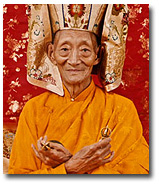

Kalu Rinpoche
Masters and Their Organisations
Tibetan
Tibetan SHENGPA
Master: Kalu Rinpoche (1905 – 1989) †
Organisation: Samdrub Darjay Choling Monastery – Kabje Kalu Rinpoche International Seat of the Shengpa Lineage

Upon the request of his Holiness the 16th Karmapa, Kalu Rinpoche made his first of many trips to the West in 1971, He was one of the first Tibetan masters to teach in the West, stopping at Holy sites in Jerusalem then visiting Pope Paul VI at the Vatican. Kalu Rinpoche respected all of the world’s religions and spiritual traditions. During his life he made numerous trips around the world, establishing a large number of Meditation and Retreat Centers. Through his unceasing love and compassion he turned the great wheel of the Precious Buddha Dharma worldwide benefiting countless being.

The Venerable Dorje Chang Kalu Rinpoche passed into Paranivana at his monastery in Sonada, Darjeeling India on May 10 1989. The Holy Lama’s body showed no signs of corruption and has been preserved as a Kardung, which can be seen to this day at his Monastery Samdrup Darjay Choling in Sonada. His devoted disciple and heart son, Bokar Rinpoche wrote about Kalu Rinpoche “The gentleness of his being, the pervasiveness of his kindness, the brilliance of his wisdom and the irresistibly of his since of humor has touched hearts in every part of the world”.

From his humble beginnings in a remote location in Eastern Tibet, to a citizen of the world The Venerable Kalu Rinpoche sought only to benefit others. Through his enlightened activity countless beings have been set firmly on the path to ultimate freedom. The Venerable Dorge Chang Kalu Rinpoche is one of the greatest Buddhist Masters of our age and is highly respected and loved by countless beings that had the great fortunate to meet and receive blessings and teachings from this Extraordinary Saint

Biography: His Eminence Khyabje Kalu Rinpoche was born in 1905 in Kham province in eastern Tibet. His father, the thirteenth incarnation of Ratak Palsang Tulku was an accomplished Yogi and well-known Doctor. His mother Drolkar devoted to Dharma from an early age compelted one hundred million recitations of the Vajra Guru mantra, two hundred million Mani’s, and one hundred million Vajrasattva mantras. Both of Kalu Rinpoche’s parents were direct disciples of the initiators of the non-sectarian (Rime) movement, which emphasized the common ground of the Tibetan Buddhist Lineages; Jamgon Kontrol Lodro Thaye, Jamyang Keyrntse Wangpo and Mipham Rinpoche.

When Rinpoche was born, above his house brilliant rainbows formed and snow fell gently like a rain of flowers. His mother and relatives described how, as soon as he was born, he looked around and smiled radiantly, showing no fear or shyness, and he spoke the Six-Syllable Mantra. His parents and everyone in the region were full of joy, and his birth was heralded as the birth of a very wonderful incarnation. As a child, noble virtuous tendencies stirred within him and noble innate propensities for compassion and devotion arouse naturally. His compassion for sentient beings would often move him to tears, particularly for those afflicted and oppressed by suffering.

Kalu Rinpoche was recognized as the activity emanation of Jamgon Kontrul but his Father refused to give him up to the monastery and instead trained his son in Buddhist Studies and Medicine. Because his father worked enthusiastically at his own practice of daily recitations, meditations, and retreats, Kalu Rinpoche endowed with a good intellect, also had to rise early and retire late, his days filled with meditation, practice and training. At the age of thirteen, the eleventh Tai-Situ, Padma Wangchuk, gave him ordination and the name Karma Rangjung Kunchab – Self-Arisen and All-Pervading. In later years, everyone said that it was an appropriate name. When Kalu Rinpoche was fifteen he went to Palpung Monastery where he mastered the vast body of Buddhist Teachings and completed two traditional three-year retreats.

Kalu Rinpoche had great faith and devotion to the lamas with whom he formed a connection receiving from them empowerments, which mature one spiritually, and teachings, which enable one to attain liberation. Before entering his first three-year retreat he spoke on the three ordinations before an assembly of hundreds of monks, nuns, and lay people. Because he spoke with no fear, with confidence and a sound understanding, his exposition captured the hearts of everyone. People commented on his clear intellect, good delivery, and accurate presentation.

Kalu Rinpoche took White Tara and Avalokiteshvara as his yidams and the age of fifteen and undertook a summer retreat. At the age of sixteen, he entered the three-year, three-month retreat course of practice in the great retreat center at Tsa-dra Rinchen Drak. This retreat had been the main seat of Jamgon Kontrul whose coming had been foretold by the Buddha in many sutras and tantras. At this time, his faith in his lamas and the Dharma and his enthusiasm for practice knew no limit. Some idea of Rinpoche’s enthusiasm for Dharma may be gained from his determination to avoid any waste of time during the three-year retreat. To ensure that he would wake up in the morning, he would go to sleep leaning against the door to his room. When the monk kicked opens the door to the rooms to wake up the retreatants in the morning, Rinpoche was sent flying across his room. If he felt sleepy during the day, he sat on his window ledge. In this position he would fall onto the floor as soon as he dozed off.

As for his faith, Rinpoche felt such devotion for his teacher, Lama Norbu, that during his life, he offered everything he owned to him on three separate occasions.

Kalu Rinpoche became a lineage holder for the Shangpa and Karma Kagyu Traditions and studied with many learned and attained masters from all of the lineages of Tibetan Buddhism: the 16thKarmapa, the eleventh Tai-Situ Rinpoche, Padma Wangchuk, Palpung Khyentse Shenpen Ozer, the fifth Dzokchen Rinpoche (abbot of the major Nyingma monastery in Eastern Tibet), Khyentse Chokyi Lodru, Dudjom Rinpoche (present head of the Nyingmapa school His Holiness the Dalai Lama, the two tutors of the Dalai Lama (Ling Rinpoche and Trijang Rinpoche)a Dingo Khyentse Rinpoche (the mind emanation of Khyentse Wangpo), Kangyur Rinpoche, Chatral Rinpoche Songjay Dorje, Sakya Trichen (head of one of the two principal families of the Sakya School), Dezhung Rinpoche (senior scholar of the Sakya School), and others. With these holy lamas, Rinpoche continually worked diligently at studying, contemplating, meditation, and practicing innumerable collections of instructions from both the sutras and tantras of the Old and New Traditions. Through his endeavors he became like a spiritual son to all of them.

At the age of 25 he renounced all worldly activity and began approximately 15 years of intensive solitary retreat in the remote mountainous areas in the manor of the great Tibetan Yogi Milirepa. Upon the request of the Karmapa He returned to become a retreat master, training many students. In 1962 Kalu Rinpoche went to Darjeeling West Bengal India where he established his own Monastery and Retreat Center, Samdrup Darjay Choling Monastery where students from any tradition may do retreat practices in the Rime Tradition.

Main Centre:

There are several monasteries, meditation centers and religious institutions established by Kalu Rinpoche around the world. The main Monastery of Kalu Rinpoche is in Darjeeling, India.

888888888888888888888888888888888888888888888888888888888888888888888888888888888888888888888888888888888888888888888888888888888888888888888888888888888888888888888888888888888888888888

Kalu Rinpoche Quotes

Kalu Rinpoche's quotes often reflect his profound insights into the nature of reality and the mind. Here are some of his notable quotes:

888888888888888888888888888888888888888888888888888888888888888888888888888888888888888888888888888888888888888888888888888888888888888888888888888888888888888888888888888888888888888888888888888888888888888888888888888888888888888888888888888888888888888888888888888888888888888888888888888888888888888888888888888888888888888888888888888888888888888888888888888888888888

No comments:

Post a Comment